Microplastics: What Can We Do?

“Plastics,” the one-word career advice offered in the 1967 movie The Graduate marked their emerging worldwide impact. The light weight, durability, and low cost of synthetic plastics have made possible seemingly unlimited applications and products. As a result, they are now ubiquitous. Unfortunately, so are microplastic particles. They form over time by the release and breakdown of … Read more

Is Immersion Just a Fad? [Pt 2]

East Texas Oil Museum interior scene

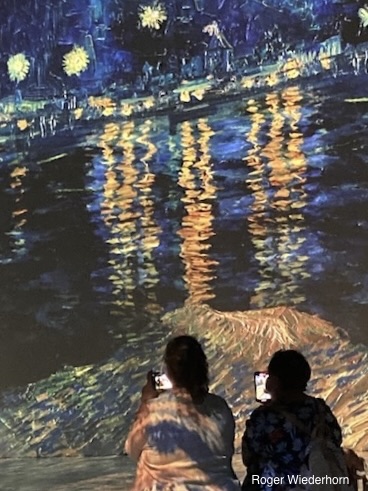
In early 2021, there were as many as five competing “immersive” Van Gogh shows in the U.S. One producer has since declared bankruptcy. Multiple attractions continue to compete for visitors in some cities, and there may be a shakeout in oversaturated markets. Nevertheless, new immersive venues and programs continue to be developed, most as commercial … Read more

Is Immersion Just a Fad? [Part 1]

More than three decades ago, I had the opportunity to view the immersive Cités-Cinés exhibition in Paris. Within a variety of city-themed scenes, such as a garage, rooftop, and jail cell, visitors could watch short clips from classic movies that had been filmed in similar settings. There was no text, only sound tracks played through … Read more

How Did a Museum Change?

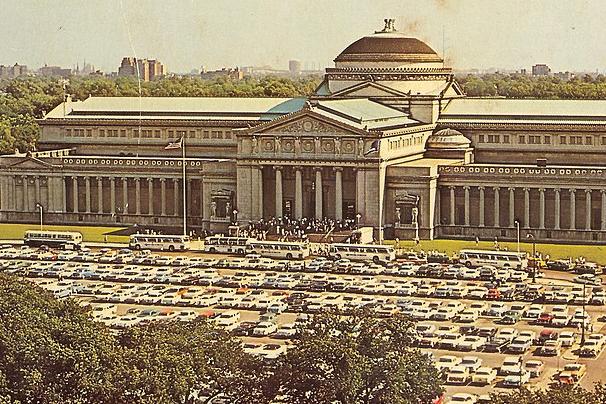
In 1979, the Center for Science in the Public Interest issued a White Paper by Howard Learner that described Chicago’s Museum of Science and Industry (MSI) as a “supermarket of corporate logos.” He stated further that “without assertive curatorial control by the museum, the exhibits can result in glossy, image-building advertisements, at best, and blatant … Read more

How Has the Field Changed?

In conjunction with its 50th anniversary, the Association of Science and Technology Centers (ASTC) issued a request for reflections on the biggest changes in the field and those we have helped foster. This post is a response to that call.  Over the past four decades, I have witnessed major changes in the science center field … Read more

Why CRISPR Calls for Public Engagement?

CRISPR is a big deal. Its promise is great, but it also brings risks and raises critical issues that warrant public discussion. This powerful technique offers a relatively easy way to precisely edit the genetic code by “cutting and pasting.” Custom RNA is used to guide an enzyme (Cas9) to a specific section of DNA, … Read more

Can Museums Prevent Cognitive Decline Among Older Adults?

Since getting older and being diagnosed with Parkinson’s disease, I’ve become especially interested in the topic of the aging brain. The good news is that neuroplasticity enables the brain to modify its structure and function in response to experience. (Interestingly, early scientific evidence for anatomical brain plasticity was discovered in the 1960s by Marian Diamond … Read more

What Should Undergraduate Education Look Like in 2040?

UC Davis, Engineering

While I was at NSF, a program officer in the Division of Undergraduate Education (Myles Boylan) requested my input on a proposal from SENCER (Science Education for New Civic Engagements and Responsibilities). I was excited to see that this program was founded on aspects of informal learning, creating college courses based on civic engagement that … Read more

Why do Proposals Fail to Get Funded?

During my time at NSF, I had the opportunity to review thousands of proposals in my capacity as a program officer, section head, deputy division director, and acting division director. Unfortunately, most of them had to be declined. Of course, the funds available were a major limiting factor. (The process by which the budget of … Read more